
Episode 27 - James Currier: Access, Network Effects, and the Future of Venture Capital
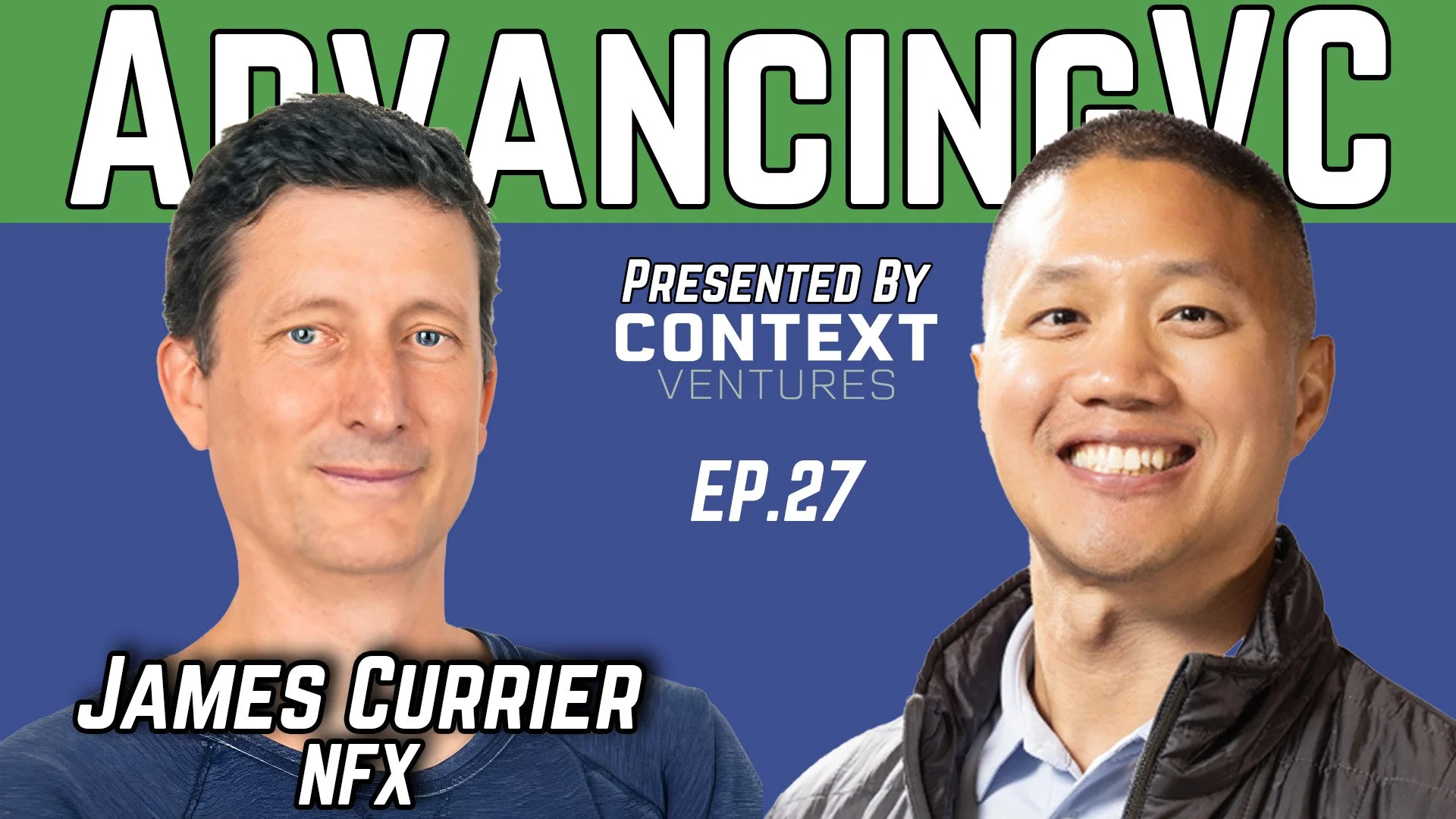
In this episode of the Advancing VC Podcast, we sit down with James Currier, General Partner at NFX, one of Silicon Valley’s most influential early-stage venture firms. A repeat founder who helped build and exit multiple companies before moving into venture, James has spent decades studying the mechanics of startup success—from network effects and market timing to founder psychology and venture market structure. James shares his perspective on what actually makes a great venture investor: not just returns, but access, taste, and the ability to recognize which technology windows are opening before the rest of the market catches on. He explains why the best investors are often defined less by helping founders and more by getting into the right deals at the right moment—while still building trust that compounds into access for future generations of founders. We go deep into how venture itself is changing. James unpacks his “VC 3.0” thesis, why private markets are becoming increasingly transparent, and what a future “Bloomberg terminal for startups” could mean for founders and fund managers alike. He shares why he believes venture is simultaneously expanding to tens of thousands of managers while concentrating power among a handful of mega-firms, and what that means for emerging managers trying to break in. The conversation also explores why geography still matters more than most founders admit. James makes the case that San Francisco remains the center of gravity for startup formation, especially in AI, and why in-person teams still outperform distributed ones—despite the rise of remote work and AI agents. He explains why being embedded in the Bay Area network compounds founder success, access to talent, and investor signal. Key topics include:
Why access, taste, and market timing matter more than “platform support” in venture
The rise of a “Bloomberg terminal” for startup investing and increasing private market efficiency
Why San Francisco remains the dominant startup ecosystem in the AI era
How NFX evaluates founders through the lens of personal transformation and market readiness
Why pre-seed remains one of the most inefficient and attractive places for emerging managers
The importance of social graph access and being “best friends with the next generation of founders”
Why second-time founders may now be structurally advantaged in AI
How NFX thinks about follow-ons, secondaries, and long-duration power-law investing
Why venture debt is often a trap for early-stage founders
The evolution of deep tech, defense, space, and consumer in an AI-first world
Why network effects remain the strongest defensibility—and which types founders still misunderstand
James also shares candid views on founder selection: why the best teams must be both exceptional and operating in “fertile soil,” why distributed companies are often at a disadvantage, and how AI is accelerating startup competition to the point where companies may soon need to pivot weekly rather than annually. The episode closes with a discussion on network effects as a framework not just for startups, but for careers and life decisions. James reflects on how young founders should think about embedding themselves in the right ecosystems, why platform businesses remain underappreciated, and how startup success increasingly mirrors other mature creative industries like Hollywood—where access, signaling, and network position become more important over time. Tune in to learn:
Why venture returns often come from companies investors barely had to “help”
How to identify fertile markets before they become obvious
What makes pre-seed one of the last true inefficiencies in venture
Why physical proximity still compounds startup outcomes in AI
How network effects apply to careers, communities, and founder ecosystems
Why emerging managers win by being early in communities before they’re legible to institutions
How founders should think about choosing markets that are opening—not closing
Whether you’re an emerging manager, founder, or LP, this conversation offers a deep look into how one of venture’s most systems-driven investors sees the next decade of startup formation and capital allocation. #AdvancingVC #JamesCurrier #NFX #VentureCapital #EmergingManagers #PreSeed #SeedInvesting #AI #NetworkEffects #StartupEcosystems #DeepTech #DefenseTech #SanFrancisco #FounderAdvice
Listen to full episode :